Category Archives: Engaging the World

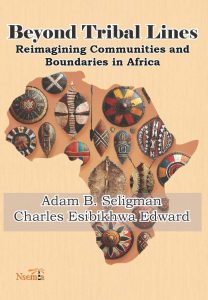
Beyond Tribal Lines published in Kenya

Adam B. Seligman and Charles Esibikhwa Edward’s Beyond Tribal Lines: Reimagining Communities and Boundaries in Africa was published in 2025.

Beyond Tribal Lines: Reimagining Communities and Boundaries in Africa is about the perceptions, understandings, and experiences of difference between selves and communities in Africa and beyond. It focuses on the nature of difference in its many manifestations – social and communal, local and national – and the fundamental bases and typical consequences of such difference. Further, it explains the importance of difference between individuals, communities and societies; affirming that difference is natural to human social and individual existence.

Critically, it takes up the challenge of how – given the many differences between us – a society may achieve peaceful co-existence and harmony among its members. The book makes the case that being different doesn’t necessitate being enemies, antagonists or subjects of contestation. To address and live with said difference, the authors present thoughtful ideas on realizing social harmony through individual and community reflection and understanding.

What Others Say
“Lawyers engaging transformative constitutions in Africa will find the book useful in interrogating these constitutions’ implementation which calls for a multi-disciplinary approach to their interpretation and implementation. The various insights of this book necessarily engage the burning issue of the people’s sovereign power. Political scientists interrogating the politics of division and the quest for alternative forms of political leadership in Africa will find the book’s theoretical and practical reflections useful.”
– Dr. Willy Mutunga, EGH, former Chief Justice, Kenyan lawyer, intellectual, reform activist, and former Commonwealth Special Envoy to the Maldives.


NSD training community organizers in Indonesia

The Institute for Research Governance and Social Change (IRGSC) in Kupang, West Timor, Indonesia, which runs the Nusantara School of Difference (NSD), is shifting its focus to training community activists and organizers. Since 2017, NSD programs have been devoted to intellectually engaging the many ongoing socioeconomic challenges of Indonesian society, with a special emphasis on historical continuity. While NSD will continue to run programs focused on contemporary challenges in Indonesia, it aims to focus more explicitly on training a younger generation of community activists and organizers who can inculcate the CEDAR methodology and pedagogy into myriad different civic initiatives in Timor and East Nusa Tenggara (Nusa Tenggara Timur.)

J-term course on Difference at National Presbyterian

As part of the 2024 January Adult Sunday School classes at National Presbyterian Church in Washington, DC, David Montgomery will lead a discussion on “Learning to Live with Difference.” In an increasingly polarized world, one of the biggest challenges we face is to find ways of living peacefully and productively with people who are different from us religiously, politically, culturally, etc. During these classes, we will explore tools developed by CEDAR–Communities Engaging with Difference and Religion that can help communities learn to live with difference. For more details, see here.

CEDAR-Japan Workshop for Living with Immigrant Workers

Seeing Them in Us, Seeing Us in Them: Workshop for Living with Immigrant Workers in Our Community, Higashi-Hiroshima

Cedar-Japan together with the Research Center for Diversity and Inclusion, the Institute for Diversity and Inclusion, The Institute for the Promotion of Interculturalism in Education at Hiroshima University as well as Cosmos House, Umajuku Community Council at Shiwa are holding a workshop on January 5th-8th on the subject of migrant workers in Japan. Participants include educators, social workers, community organizers and nurses from throughout the country. This is part of ongoing initiatives in Hiroshima Prefecture.

The Kitara School of Difference Established in Uganda

The Kitara School of Difference (KSD) has been established in St. Ignatius University Kabale. Formerly the Equator Peace Academy (EPA), which was based at Uganda Martyrs University and ran regular programs since 2012, the KSD will continue the work begun by EPA to extend more dialogue and deeper analysis of issues on difference in the area of the former Kitara kingdom. Indeed, the name of the school is drawn from the legendary oral tradition Kitara Kingdom. The kingdom supposedly lasted until the 16th century in the territory of modern Uganda, northern Tanzania, eastern Congo (DRC), Rwanda, and Burundi. Today, people living in the areas of former Kitara share somewhat similar Bantu languages and cultures, often intermarry, though have had numerous cultural and traditional conflicts. The KSD is designed to engage thematic issues in this region with the aim of confronting problems of intolerance to diversity, divisive governance, and the turbulent past. As a CEDAR affiliate, KSD utilizes the CEDAR pedagogy to bring international participants together to explore issues of living together differently. The goal is to understand and overcome the type of social segregation and violence that have so often characterize relations between different communities in this region. At St. Ignatius University, the school is housed within the Center for Planning and Development (CPD).

Kenyan Program on Pedagogies for Community Established

The Kenyan Program on Pedagogies for Community (KPPC) was created by the Culture for Peace, Development and Rights non-profit organization in Kenya. Emerging out of training during CEDAR affiliate programs, KPPC focuses on addressing the major challenges facing Kenya today. These include the dynamics of fostering unity and understanding the intricate interplay of cultural  diversity and social, political, and economic differences. Positioned within the organizational framework of CEDAR, KPPC is dedicated to fostering sustainable development and peacebuilding in Kenya. Its primary mission revolves around unraveling the inherent dynamics of Kenya’s diverse communities, with a specific focus on interfaith dialogue, cross-cultural understanding, and the nuanced dynamics of tribal belonging. A central tenet of its philosophy is cultivating a profound comprehension of the distinctive customs, traditions, and religious paradigms that underpin the fabric of society in Kenya. Employing a CEDAR approach that transcends conventional political discourse, KPPC endeavors to establish a foundation for enduring coexistence and knowledge acquisition. Its comprehensive initiative aims to engender understanding and empathy among diverse Kenyan communities, delving beyond immediate political realities to explore historical, economic, and social factors contributing to the recurrent episodes of violence that have plagues the country. KPPC works to be a catalyst for sustainable coexistence and learning, envisioning a transformative role in fostering unity and comprehension among Kenya’s multifaceted demographic groups.

CEDAR partners with Eshel to help build communities of difference

Living in society demands living among many different types of people, including those whose norms, models of a good life, and moral imperatives may differ from our own—for example, with respect to family, gender, and sexual orientations. How can we live harmoniously among people with different political ideas, moral beliefs, religious commitments, communal loyalties, and sexualities? How do we accommodate such difference, and when does the social fabric of belonging stretch beyond the breaking point? In other words, how can we engage the other with compassion, while also sustaining the group boundaries that define us?

Attempting to address such questions is uniquely challenging in Orthodox and ultra-Orthodox Jewish communities, especially when perceived threats touch upon basic human needs, the vulnerabilities of the body, and specifically gender and sexuality.  One group’s sexual expressions are seen by another as a sign of corruption and decadence. One community’s commitment to holiness and self-restraint is taken by the other as an invitation to pathological hatred. For gay teens and young adults growing up in Orthodox Jewish environments, the crucible of crushing guilt can lead to mortal danger. The conflict between longstanding religious norms and emerging social and scientific realities has occasionally resulted not only in suicide but also in violence in the streets.

Eshel is a nonprofit organization in the United States and Canada that works to create community and acceptance for lesbian, gay, bisexual, and transgender Jews and their families in Orthodox Jewish communities. Increasingly over the past few years, CEDAR staff have been working with Eshel leadership toward developing programming for an open and inclusive place in Orthodox Jewish communities where LGBTQ individuals can feel welcome as full members of the community, able to live their lives according to their own choices and preferences.

Eshel’s approach to matters of sexual preference embodies CEDAR’s philosophy regarding the importance of accepting difference, especially from and within more traditional social, cultural, and religious parameters. Eshel’s work in schools, families, among individuals, and in Orthodox synagogues aligns with CEDAR’s pedagogy for living with difference, and we are pleased and honored to play a role in its development. Thus far, collaboration has revolved around programming events, though we are looking forward to expanding our collaboration in the development of shared projects and pedagogies.

EPA in Conversation on Body Culture and Conflict

Emerging out of a very successful and challenging 2019 Equator Peace Academy program in Uganda and Kenya on Body Culture in East Africa, EPA has begun discussions in some local parishes in the Bukwo district of Uganda on developing new attitudes and approaches to body culture in East Africa. Much of this work has been on hold because of the COVID-19 pandemic but will resume as soon as the situation allows.

At the same time, EPA has been working with fellows from former schools in both Western Uganda and Goma, the Democratic Republic of the Congo to develop EPA/CEDAR pedagogies in addressing local challenges around tribalism, religious divisions, national frontiers, and ethnonational conflict. It is hoped that these will lead to further initiatives in Eastern DRC as well as Western Uganda

Difference and Its Demons, by Adam B. Seligman

Of all the many uncomfortable truths this election has forced us all to face, surely one of the most important is our discomfort with difference. This attitude was made clear in the months leading up to the elections, in much of the campaign rhetoric and the slogans repeated at many rallies. It was made clear as well in certain policy recommendations: building a wall sealing off Mexico, deporting over three million illegal immigrants, establishing a register for Muslims, and so on. Whether these campaign promises will become policy we have yet to see. But the deep feelings of fear, foreboding, and discomfort that they have exposed are undeniable, while the extent to which we are unable even to face people with political, social, religious, and class affiliations that differ from ours is profoundly disturbing. Further, overt racism, misogyny, Islamaphobia, and downright hatred have become part of our national life. The FBI and NGOs such as the Southern Poverty Law Center all report a substantial uptick in hate crimes and racist and anti-Muslim incidents in the months leading up to the election, an increase that continues today.

Half a century ago our schools, restaurants and swimming pools were desegregated, mostly by court order, and sometimes with the involvement of federal troops as well. As difficult a social process as that proved to be, it seems that the desegregation of our minds has hardly progressed at all. Perhaps, in fact, such segregation has increased. We live more and more in different realities, trust (and distrust) different institutions, grant moral credit to different communities, believe different news feeds and are less and less inclined—and almost never required—to go beyond our comfort zone of like-minded folk.

Isolated, inward-turning, and afraid, many of us—Democrats and Republicans alike—are demonizing our respective “others” rather than encountering them and wrestling with their difference.  These “others” may be Muslims, immigrants, transgendered individuals, or supporters of the opposite political party. But the divisions are not just about the posters at Trump campaign rallies that castigated “Hitlary”, or Secretary Clinton’s remarks on “deplorables.” They relate to a whole culture, one that crosses political, social, and religious differences. We live in a country that prizes comfort over knowledge, safety over experience, and self-righteousness over truth-seeking. These proclivities are just as visible on liberal college campuses as in southern Evangelical churches and can be encountered in Democratic Party caucuses as well as on the Breitbart news site.

As a nation, we have become fearful. And fear is dangerous, both to others and to ourselves. It causes us to lash out, stop thinking, lose our perspicacity, and bury our analytic capabilities. Our responses to events and to people are no longer measured or rational, but potentially counterproductive, if not downright dangerous. And why have we become fearful? Because fear is easier to deal with than discomfort. Discomfort is too demanding. To remain open to the other and voluntarily feel uncomfortable encountering his or her alien positions, lifestyle, beliefs, or politics is a difficult burden. It implies existing in a certain cognitive dissonance. Believing in what we believe, while all the while also being open, listening to, and responding to the other. Much easier to demonize him or her as a “radical Islamic” terrorist, a “degenerate Jew,” a homosexual who “chooses” to subvert Christian family values, or a “know-nothing” racist, white supremacist, homophobe, or misogynist. Some of these categories may sometimes fit some individuals. It is, however, that very burden of uncertainty that we shy away from. It is far less trouble to tar everyone with the same brush than to carefully parse, argue with, and perhaps even refute a particular argument, policy recommendation, or political position.

Fear correlates with danger, and our responses to danger tend to be clear-cut and often violent. When we are in danger, we know (or think we know) what to do. Not so with discomfort, with understanding a situation (or person, position, or policy) as risky. The very ambiguity of risk, as opposed to danger, is unsettling and hard to tolerate. No tolerance is called for in situations of danger—only action.

If we are to prevent the outbreak of violence that could well accompany perceptions of danger on all sides, it is imperative for us all to begin to encounter, wrestle with, and even come to terms with difference—not solely the generally acknowledged” deep divisions in our society,” but the real people behind these differences. We must learn to be uncomfortable in the face of the other. We must learn to tolerate living with less than perfect knowledge of the world around us and to accept, suffer, and abide by the ambiguity that inheres to the stranger, the outsider—whether that otherness is one of race, religion, ethnicity, nationhood, political affiliation, class membership, or sexual identity.

The establishment of forums for encountering, rather than eliding, difference should be foremost on our political agenda.  We have taken some steps in this direction with CEDAR – Communities Engaging with Difference and Religion that creates a space for such encounters.  There we have come to recognize that we do not need a false pluralism that looks for what is common to us all, but rather an honest admission of the deep, constitutive differences that exist among us. And we must face such differences without fear or any false hopes of “overcoming” them. Instead, we must commit to building the skills necessary for a life of discomfort. That, at least, we can all share.

Adam B. Seligman is the Director of CEDAR and a Professor of Religion at Boston University.
What We See Is Not Necessarily Reality, by Adam B. Seligman

A few weeks ago, Christmas Day actually, which in 2015 was also a Friday and the birthday of the Prophet Muhammad to boot, found me at the Jingjue Mosque in central Nanjing, a city of 8 million inhabitants with a Muslim population of about 100,000. There were about 900 people in attendance filling the mosque and the surrounding courtyards, which stretched out both to the sides of the mosque and in front of it.

What struck me right away was the great range of the congregants’ backgrounds: Han Chinese (converts to Islam), Uighurs from Xianjiang Province, Indonesians, Pakistanis, Central Asians, Indonesians, Arabs, North Africans, Africans from both East and West Africa, as well as Caucasians. There were students and old folk, men dressed in jeans and flowing robes, some with hip-hop hats and Uzbek (and Kyrgyz) headgear, some bearded and others clean-shaven (and everything in between, as befits some stylish young trends), some with socks and many without, despite the thermometer being in the low 40s. New migrants from the northwest of the country added to the existing Muslim presence, now sadly depleted—only four mosques are left in a city where there were once dozens.

What I noticed next was the diversity within unity, the distinct and palpable individuality and uniqueness of each and every man bent in prayer. A religion that emphasizes practice, rather than belief alone, allows for, even requires, a fractile field of differences; people do not hold their hands in exactly the same position, maintain the self-same posture, or prostrate themselves in an identical manner, even if they are all striving for exactly the same prescribed positions.

I was suddenly reminded of a colleague, an expert on religion in Europe, who once remarked that in his view Islam is a religion inherently hostile to individualism, because Muslims pray “all bunched up together, not like people in a church or synagogue.” His comment seems to me to represent, in the kindest of readings, a strictly secular, perhaps sociological perspective, which sees, perhaps even structures reality for one pair of lenses only: the observer looking in from outside. Yet from the perspective of the believers, the men and women actually praying in that space, of course they are individuals—how else should they approach God?

The view from outside looking in, especially the view trained in one reality and one way of looking at the world, by its nature imposes a certain unity, if not homogeneity, on what it finds strange and unsettling. Those gathered for Friday prayer do not in fact lack individuality; rather, the Western, Christian, and post-Christian eyes are just not trained to see it. To make sense out of what we find both foreign and, especially in these times, threatening, we lose “granularity,” we lose the specifics. We abstract, generalize, lump together, and homogenize—and in the process we see not individuals, but only an undifferentiated mass. But what we see is not necessarily the reality.

During my stay I spent a good deal of time in different mosques, and meeting with different Muslim communities and individuals in and around Nanjing. I was visiting China to explore setting up a summer school on how to live with religious and ethnic difference, based on the blueprint developed by CEDAR. For a while now, China has been experiencing massive population transfers, generally from the north and west to the southeast. These economic migrants face prejudice and social ostracism, as their very presence challenges established boundaries of community, religious practice, and ethnic identity. Engaging with difference is therefore an important mandate, in today’s China as in many other parts of the world.

China today is also struggling with its policies and often outdated laws affecting Muslims and adherents of other religions among its citizens. Should group prayer on university campuses be permitted? Who can be a prayer leader? Where may donations to religious organizations originate? The government seems to be searching for a manageable, middle-of-the-road policy that would allow religious expression, without also opening the floodgates of religious and ethnic separatism —all the while, to be sure, taking care not to do anything that will lead to a greater sense of disenfranchisement and grievance. As in so many other places in the world, policymakers—indeed, all of us—are having to learn to see the world a bit differently and shift our focus as we view the other and the unfamiliar.

As for myself, at the end of Juma I joined the congregants at lunch, forgoing the meat soup and eating only hard-boiled eggs and bread. And outside the mosque I bought some wonderful sweet rolls for my own Shabbat, which began at sundown that evening.

Adam B. Seligman is the Director of CEDAR and a Professor of Religion at Boston University.